Why visit Aït Benhaddou
Why visit Aït Benhaddou
The great earthen city of the south
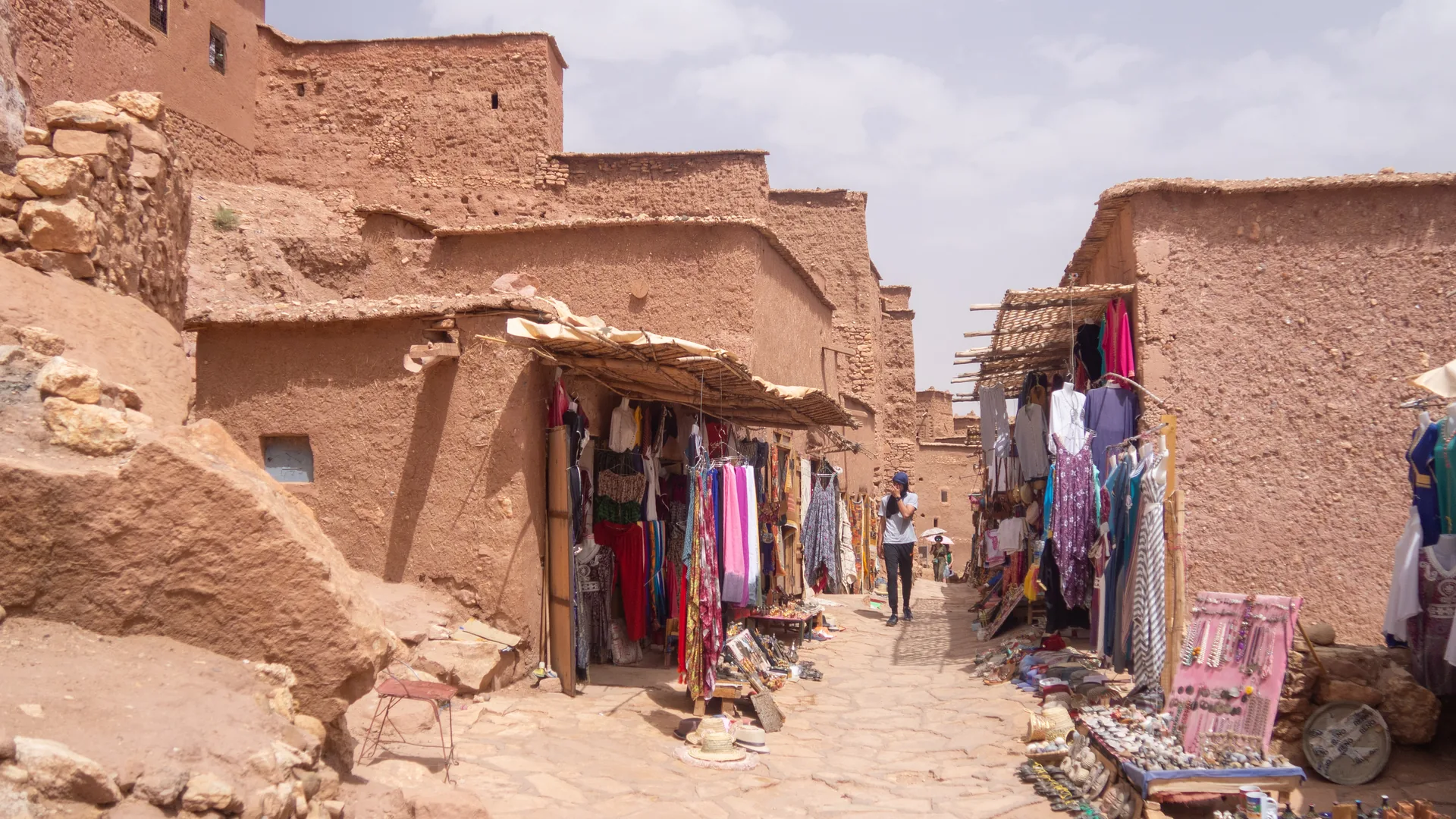
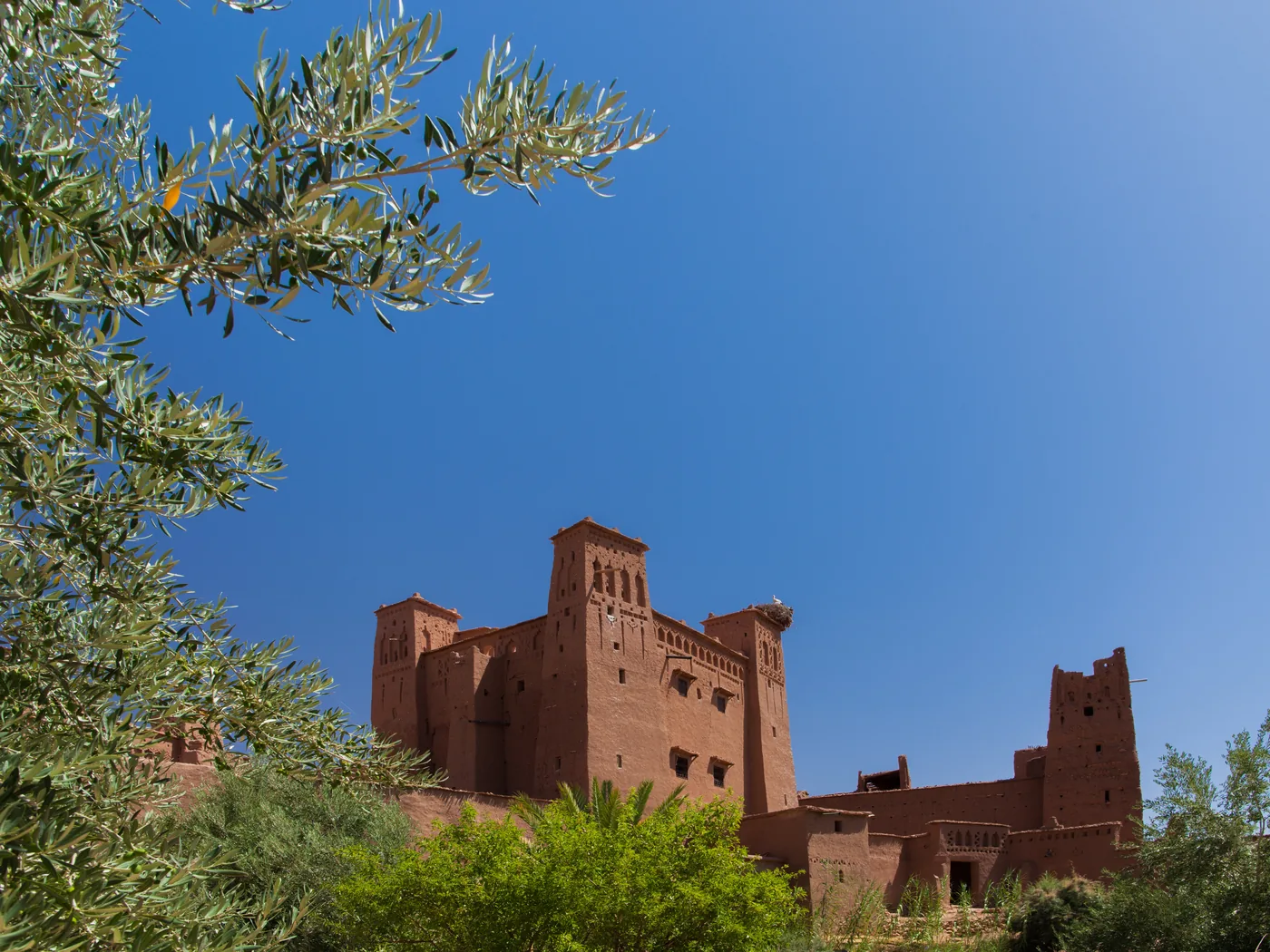
Aït Benhaddou is a ksar — a fortified village of kasbahs built entirely of rammed earth, clay and wood, rising in tiers of red-gold towers above the Ounila valley. It grew on the old caravan road that carried salt, gold and stories between the Sahara and Marrakech, and it remains one of the most striking earthen settlements anywhere. UNESCO inscribed it as a World Heritage Site in 1987.
Cinema's favourite desert
You will feel you've seen it before — because you have. Many productions have filmed here, from Lawrence of Arabia and Gladiator to The Mummy, Kingdom of Heaven and Game of Thrones. Walking its lanes and climbing to the granary at the top, you move through a landscape that has stood in for a dozen ancient worlds.
A living monument on the caravan road
A few families still live within the old ksar, while most have moved across the Ounila river to the modern village, linked now by a footbridge. The drive itself is half the wonder: the spectacular Tizi n'Tichka pass over the High Atlas, Berber villages, and the film-studio town of Ouarzazate, the 'door of the desert', close by.
What to see at Aït Benhaddou
What to see at Aït Benhaddou
A visit is a climb through the ksar and its setting, usually with the Atlas drive and Ouarzazate alongside. These are the things to look for.
- The ksar
The earthen kasbahs
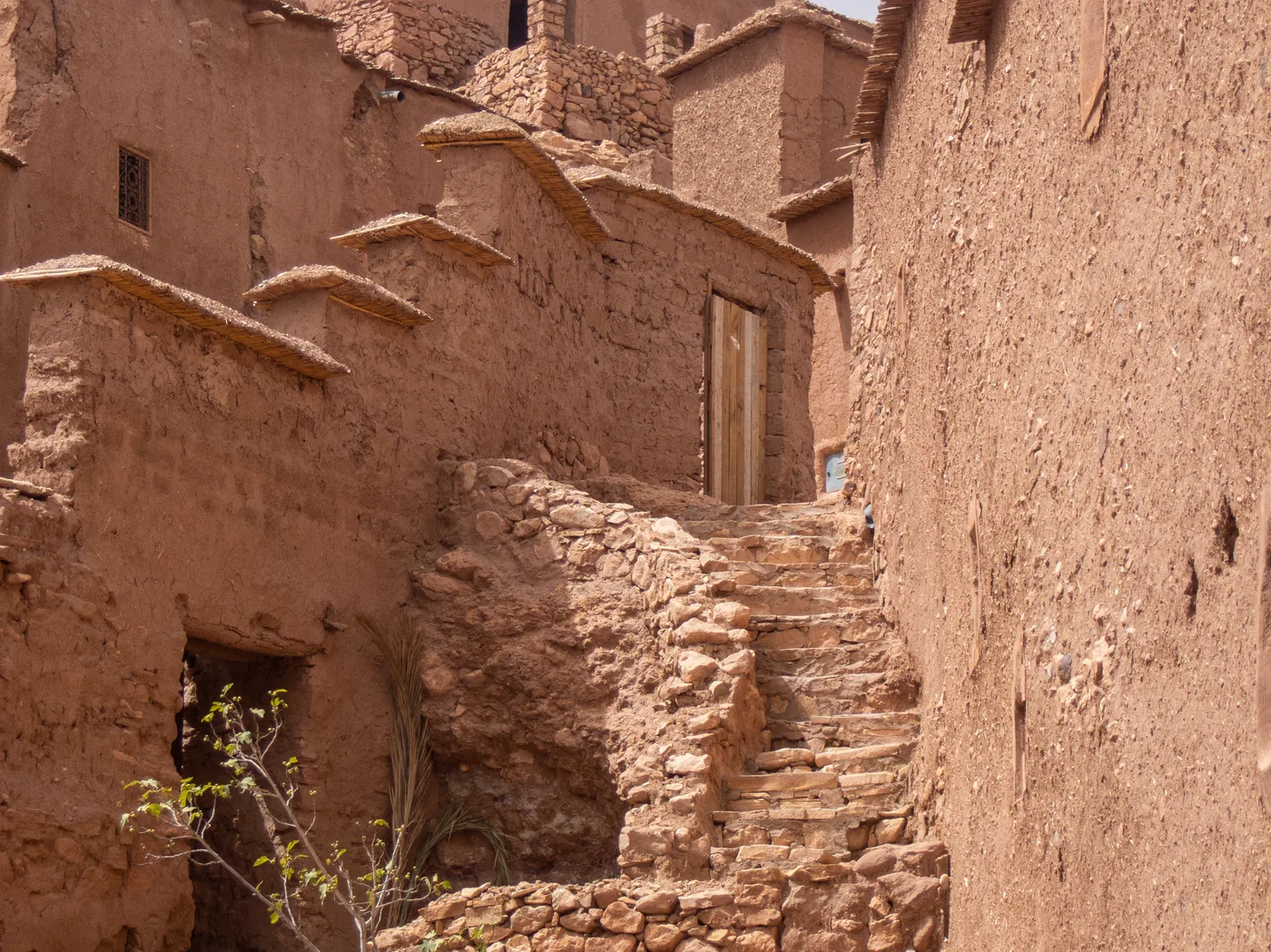
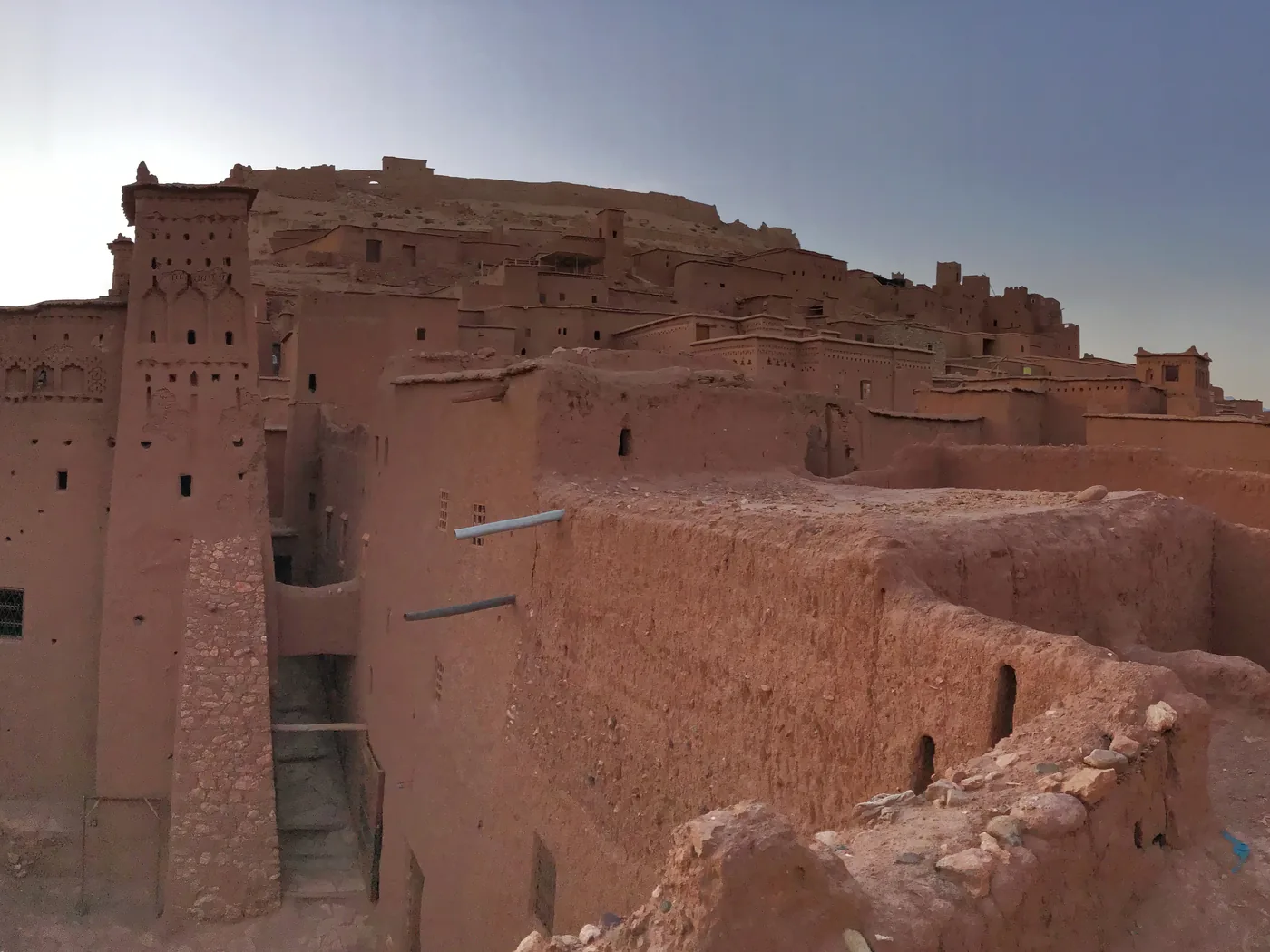
The heart of it: tiered kasbahs of rammed earth and clay, packed together behind defensive walls, glowing red-gold in the sun. Climbing the lanes between them is the essence of an Aït Benhaddou visit.
- The granary
The summit agadir
At the top of the ksar stands the old fortified granary (agadir), and from it the view opens over the Ounila valley, the palm groves and the desert beyond — the classic Aït Benhaddou panorama.
- The river
The Ounila crossing
The Ounila river runs below the ksar; a footbridge (and, when it's low, the old stepping stones) links the historic village to the modern one across the water — the approach that so many films have framed.
- Tizi n'Tichka
The High Atlas pass
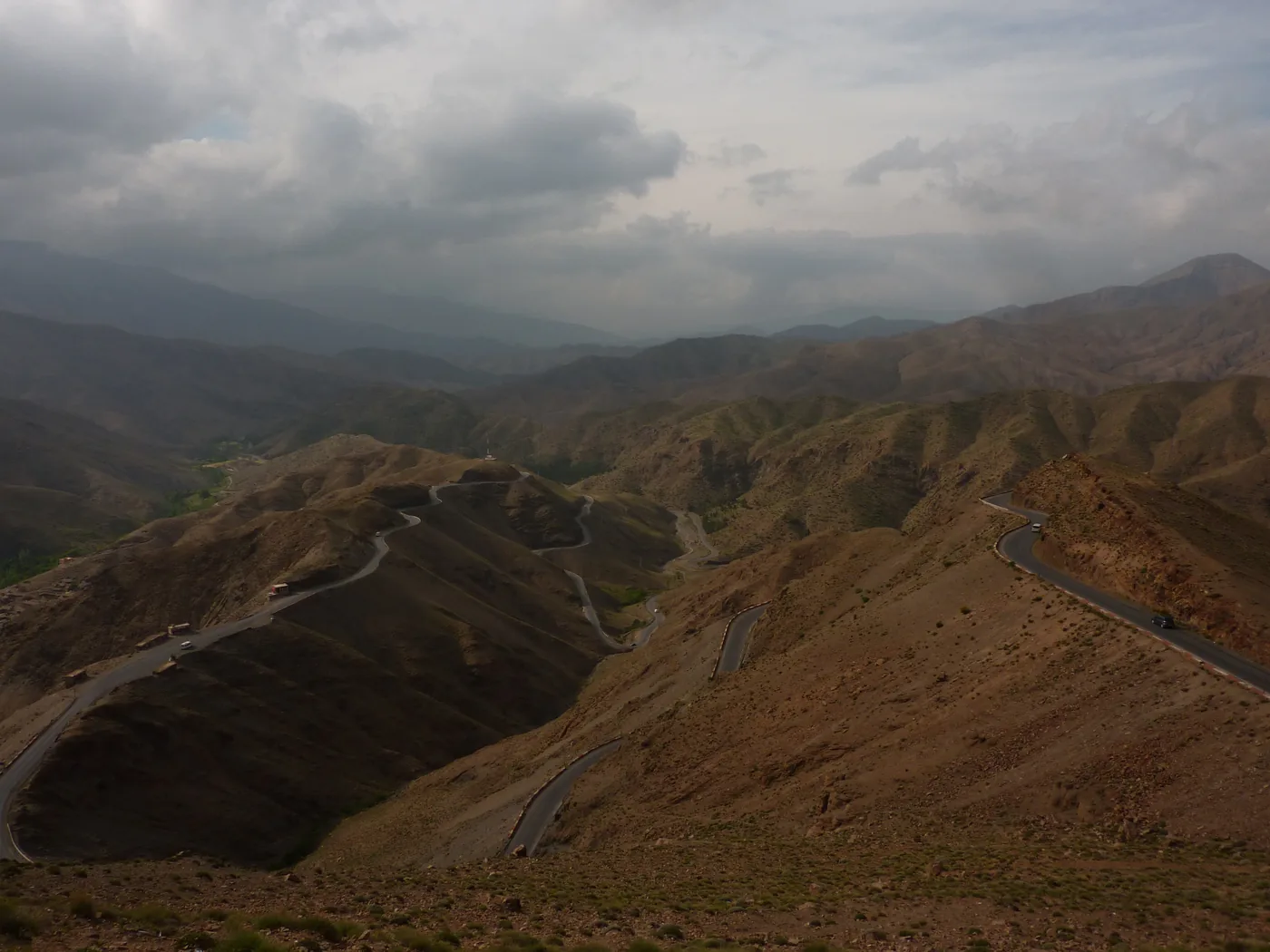
The drive crosses the Tizi n'Tichka, the highest major mountain pass in North Africa, on switchbacks through Berber country — a spectacular journey that is a genuine part of the day, not just the way there.
- Ouarzazate
The door of the desert
Nearby Ouarzazate — with its Taourirt Kasbah and the Atlas and CLA film studios — is the gateway to the Moroccan south, and many tours pair it with Aït Benhaddou.
- On film
The movie locations
Guides point out where famous scenes were shot across the ksar and the studios — a highlight for film lovers, and a fun way to see the earthen city through the eye of the camera.
The day trip from Marrakech
The day trip from Marrakech
Getting to Aït Benhaddou means crossing the High Atlas first, which is why a guided day trip from Marrakech is how nearly every visitor makes the trip. Here's how it works.
A big, rewarding day
The ksar lies on the far side of the High Atlas from Marrakech, and the road over the Tizi n'Tichka pass makes it a full day: the tour we link to is listed at about 12 hours. Tours leave early and return in the evening; it is a long day, and most of it is spent on the road.
Why go guided
The route is long and mountainous, so a guided trip takes the driving and navigation off your hands, times the stops, and brings the history of the ksar, the caravan road and the film locations to life. It's why almost everyone visits on a tour rather than self-driving.
What tours include
Day trips generally bundle round-trip transport from Marrakech, the Tizi n'Tichka drive with photo stops, guided time at Aït Benhaddou, and often Ouarzazate; some add lunch. Longer options continue to the Dades or Draa valleys over two or three days. Check what's included when you book.
On site
There's a real climb through the ksar to the granary on uneven earthen paths and steps, often in strong sun, so wear sturdy shoes and bring a hat, sunglasses, sunscreen and water. It can be hot by day and cool at altitude on the pass, so a layer helps.
Aït Benhaddou & the Atlas, in pictures
Aït Benhaddou & the Atlas, in pictures
The red kasbahs of the ksar, the Ounila valley, the granary view and the High Atlas road.
Tour options & what's included
Tour options & what's included
| Option | What it includes | Good to know |
|---|---|---|
| Group day trip | Round-trip transport from Marrakech, Atlas drive, live guide | The most common way to visit in a day |
| Small-group / premium | Fewer travellers, more time, often lunch | Less rushed at the ksar and stops |
| Private tour | Your own vehicle, guide and pace | Flexible; the priciest option |
| 2–3 day southern loop | Adds Ouarzazate, Dades/Draa valleys or the dunes | For going deeper into the Moroccan south |
Ways to visit Aït Benhaddou
Find an Aït Benhaddou day trip for your dates
Each of these Aït Benhaddou day-trip options books through GetYourGuide — dates, seat count and the final currency-converted price all show before you confirm.
Planning your visit
Planning your visit
Set aside a full day
This is an all-day trip — a long drive each way over the Atlas plus time at the ksar and Ouarzazate. Departures from Marrakech tend to be early and returns late, so block out the whole day and skip anything strenuous that evening.
Go guided
The long mountain route and the depth of the site both reward a guide: they handle the driving over the Tizi n'Tichka, time the photo stops, and bring the ksar's history and film legacy to life. For most visitors it's far better than self-driving.
Dress for sun and a climb
Seeing the ksar properly means climbing earthen paths and steps to the granary, usually in strong sun. Wear sturdy shoes and bring a hat, sunglasses, sunscreen and plenty of water — and a light layer for the cooler, higher passes.
Consider going deeper south
If Aït Benhaddou whets your appetite, longer 2–3 day tours continue to Ouarzazate's studios, the Dades and Draa valleys, and the Sahara dunes. If you have the time, it's a spectacular way to see southern Morocco.
Booking flexibility
Most tours offer free cancellation right up to 24 hours before departure, and several will reserve your place without taking payment upfront — hold a date today and pay nearer the time, leaving room to adjust your Marrakech schedule.
Planning an Aït Benhaddou day from Marrakech
Planning an Aït Benhaddou day from Marrakech
Aït Benhaddou day trip: how to book
A 12-hour guided day trip from Marrakech, what the itinerary covers, and honest alternatives: bus and taxi, your own driver, or a night near the ksar.
Read more → ARCHITECTURE EXPLAINEDWhat Is a Ksar? Aït Benhaddou's Earthen Architecture
Rammed earth and a fortified granary at the summit — how a ksar like Aït Benhaddou is built, why it takes this shape, and why it's never truly finished.
Read more → A TRADE-ROUTE HISTORYThe Caravan Road: Aït Benhaddou's Trans-Saharan Trade Story
Salt, gold and slaves once moved through this valley toward Marrakech — how Aït Benhaddou's spot on the old caravan route shaped it, and who controlled it.
Read more → ON SCREENOuallywood: The Film History of Aït Benhaddou
From Lawrence of Arabia to Game of Thrones — why this earthen ksar and the studios of nearby Ouarzazate became one of world cinema's favourite stand-in deserts.
Read more → ON THE GROUNDCrossing the River and Climbing to the Granary
What actually happens once you arrive — the river crossing, the climb through the ksar's lanes to the summit granary, and the families who still call it home.
Read more → The drive, the season, the kitMarrakech to Aït Benhaddou: the route
The Tizi n'Tichka crossing, the Telouet detour, the Ounila valley and the walk through the ksar: practical detail for the road south of Marrakech.
Read more →GEO/FAQ
Aït Benhaddou day-trip questions
What is Aït Benhaddou?
Aït Benhaddou is a ksar — a fortified earthen village of clustered kasbahs, built of rammed earth, clay and wood — in the Ounila valley near Ouarzazate, southern Morocco. Traders once broke their journey here on the route between the Sahara and Marrakech, and UNESCO added the ksar to its World Heritage list in 1987. It's also one of cinema's most-used locations, from Lawrence of Arabia to Game of Thrones.
How do I get there from Marrakech?
Aït Benhaddou lies on the far side of the High Atlas from Marrakech: the N9 road crosses the Tizi n'Tichka pass, and the ksar is a short distance west of Ouarzazate. Buses run to Ouarzazate but mostly don't go to the ksar itself, which is why many travellers book a guided day trip that takes care of the mountain driving and the stops along the way.
Is the long day trip worth it?
For most people, yes: the ksar is spectacular and atmospheric, and the drive over the Atlas is an experience in itself. It is a long day, though — the tour we link to is listed at about 12 hours — so if you'd rather not rush, consider a small-group tour with more time at the ksar, or a 2–3 day loop deeper into the south.
What will I see there?
The tiered red kasbahs of the ksar, the climb to the summit granary with its valley panorama, the Ounila river crossing, and — along the way — the Tizi n'Tichka pass and often Ouarzazate with its film studios. Guides also point out where famous film scenes were shot.
What should I wear and bring?
Seeing the ksar means climbing uneven earthen paths and steps, usually in strong sun, so wear sturdy shoes and bring a hat, sunglasses, sunscreen and plenty of water. It can be hot in the valley and cooler on the high pass, so pack a light layer too.
Can I combine it with Ouarzazate or the desert?
Yes — many day trips pair Aït Benhaddou with Ouarzazate and its kasbah and film studios, and longer 2–3 day tours continue to the Dades and Draa valleys or the Sahara dunes at Merzouga or Zagora. Every tour listed in the widget spells out exactly what's covered and what it costs, and you're free to change your mind at no charge any time until the day before departure.